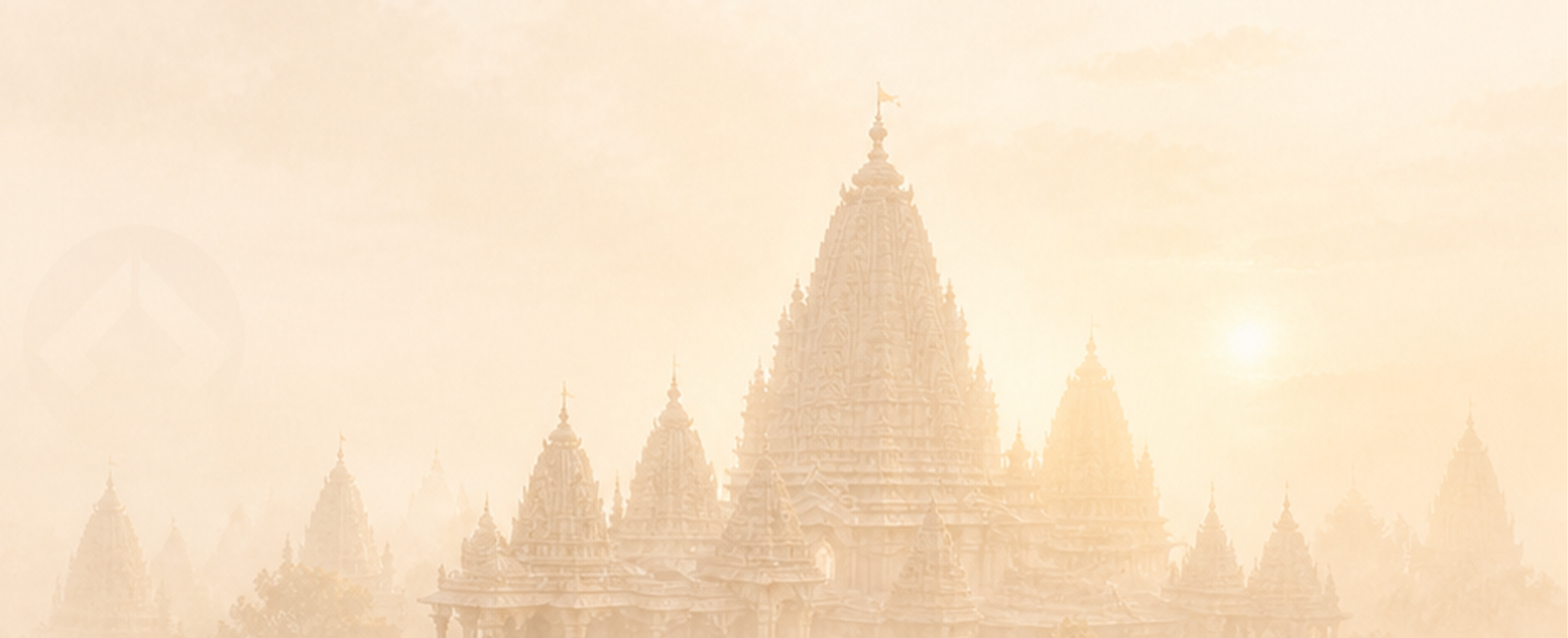
Lord Surya / Deo-Arka
West-facing Surya shrine associated with rising, midday and setting-sun forms
 Divine Mandir
Deo, Aurangabad District, Bihar, India
A living west-facing Surya Mandir in Bihar with a strong Chhath pilgrimage identity and layered architectural history.
Visitor information: This guide does not publish unverified daily opening, aarti, seva or booking times. Use current official notices and on-site directions for the day of travel.
Active Lord Surya Mandir
Deo is an active Surya pilgrimage centre, especially during Chhath. The west-facing orientation and local threefold solar interpretation are central to its identity.
The page does not publish manuscript hours, prices or healing claims as current facts. Festival crowd controls and daily operations require current authority notices.
Place-specific identity
West-facing Surya shrine associated with rising, midday and setting-sun forms.
West-facing Surya shrine associated with rising, midday and setting-sun forms
Surya, Aditya, Arka, Martanda, Navagraha Surya and Surya Narayana overlap in some settings but are not interchangeable in every source.
Devotional identity is presented without guaranteed outcomes.
Solar identity in context
Local tradition relates rising, midday and setting sunlight to Brahma, Shiva and Vishnu forms. This is presented as a temple-specific interpretation.
Tradition and evidence kept distinct
The King Ayel cure account, Vishwakarma one-night construction story and west-facing miracle are presented as local sacred traditions, not verified chronology.
Carefully bounded chronology
The manuscript records early solar worship, later inscriptions and successive rebuilding traditions. Because dates and attributions conflict, the page presents a layered history without choosing a disputed single construction date.
Supported physical character
The stone temple is notable for its west-facing orientation and tall curving profile. Descriptions of Nagara, Dravidian and Vesara influence are retained as source-attributed observations rather than a definitive classification.
What makes this destination distinct
West-facing solar shrine
Living Chhath pilgrimage
Threefold solar interpretation
Stone architectural profile
Surya Kund pilgrimage context
Layered inscription history
Plan respectful darshan
Visit fit
A living west-facing Surya Mandir in Bihar with a strong Chhath pilgrimage identity and layered architectural history.
Plan the sequenceOperations
This guide does not publish unverified daily opening, aarti, seva or booking times. Use current official notices and on-site directions for the day of travel.
Read planning guidanceMap
Map, directions, page data, structured data and astronomy use one coordinate pair.
Get directionsSafety
Never stare at the Sun, do not rely on cure claims, and follow water, crowd and fire safety.
Read safety guidanceCurrent on-site directions always take priority
Use current temple or local-authority guidance for access and festival changes.
Dress modestly and follow footwear, queue and security directions.
Use only the queue or circulation path shown by temple staff.
Approach Lord Surya / Deo-Arka quietly and keep the line moving.
Present items only where the temple currently permits.
Keep lamps, water and ritual material within authorised areas.
Never look directly at the Sun during prayer or arghya.
Collect belongings and leave circulation routes clear.
Use the route as a planning aid and account for weather, traffic and festival controls.
Current operations are not guessed
Use current official or on-site notices for exceptional access changes.
Follow the posted route, security and conservation or worship-space directions.
Fees, hours, aarti, seva, booking and event operations are omitted unless supported by a current authority notice.
Regional calendars and authority notices apply
Kartik Chhath is the principal pilgrimage period.
Chaiti Chhath is also observed in the regional calendar.
Ratha Saptami and Sunday devotion belong to the wider Surya calendar.
Public guidance without gated formula text
The approved Surya catalogue identifies short public salutations, but formula text is withheld pending Sanskrit, Vedic or tradition review. Beeja chains, nyasa, tantric practice, purashcharana, formal homa procedures and trained Vedic recitation are not published as household instructions.
Temple authority defines current practice
Follow the Mandir’s current queue, sanctum, offering and ritual directions. This guide does not create a fixed daily sequence or service list.
Five approved public pathways
Leave no harm behind
Follow official ghat and temple directions for Chhath offerings.
Do not enter water where access is restricted or unsafe.
No healing outcome is promised from temple or kund traditions.
Weather, crowds and local access
Chhath offers the strongest pilgrimage context and the heaviest crowds; quieter periods are easier for general visits.
Plan for heat, rain, altitude or winter conditions appropriate to the place.
Allow extra time during major solar festivals and local public events.
Use the live local sky card for planning only; it is not a ritual prescription.
Optional extensions, not compulsory pilgrimage order
Surya Kund and the Deo pilgrimage landscape
Aurangabad as the nearest major service centre
Gaya and Bodh Gaya as optional regional extensions
A flexible planning sequence
This is a suggested visitor sequence, not an official compulsory pilgrimage order.
Public safety controls from the approved catalogue
Source classes kept visible
Supplied Deo manuscript
Bihar government tourism material named in the manuscript
Inscription and architectural references summarised in the manuscript
Approved Surya worship-and-knowledge catalogue
Temple operations, monument access and festival controls can change. This page deliberately omits unsupported current schedules and services.